

When a leading home appliance giant lost 2 billion euros in orders for failing to meet EU carbon emission standards, and when the North American market made “carbon footprint labeling” a mandatory access requirement, manufacturing enterprises finally realized that zero-carbon transformation is no longer a distant policy mandate, but an immediate survival imperative. Interestingly, the outcomes of transformation vary drastically: some enterprises invested tens of millions in renovations only to fall into the dilemma of “emission reduction without increased revenue,” while another mechanical manufacturing enterprise, through the combined strategy of “energy optimization + process improvement,” not only reduced carbon emissions by 45% but also achieved a 30% order growth thanks to its zero-carbon certification. The key difference lies in this: the former regarded zero-carbon as a “compliance cost,” while the latter transformed it into a “competitive advantage.” The core to achieving this leap lies in the precision of technology implementation and the systematic nature of value monetization.
I. Energy Restructuring: A Cost Revolution from “Passive Electricity Procurement” to “Active Carbon Control”
Energy consumption accounts for over 70% of carbon emissions in manufacturing enterprises, with production equipment electricity use and steam supply being the core sources. The traditional model of relying solely on grid power not only makes carbon emission control difficult but also exposes profit margins to electricity price fluctuations. Building a hybrid energy system integrating “self-generated power + green electricity procurement + energy storage for peak regulation” has become the primary breakthrough for zero-carbon transformation, and enterprises of different scales can adopt differentiated approaches.
| Enterprise Type | Energy Combination Scheme | Initial Investment (for 1,000㎡ workshop) | Annual Emission Reduction Effect | Investment Payback Period |
|---|---|---|---|---|
| Small and Medium-Sized Machinery Enterprises | Distributed PV (covering 60% of roof area) + nearby green electricity procurement + small energy storage battery (50kWh) | 120,000 – 180,000 USD | Reduction of CO₂ emissions by approximately 300 tons; 25% reduction in electricity costs | 3 – 4 years |
| Medium-Sized Chemical Enterprises | Complementary PV + wind power generation (workshop roof + factory open space) + long-term green electricity agreement + energy storage system (200kWh) | 450,000 – 750,000 USD | Reduction of CO₂ emissions by approximately 1,200 tons; 32% reduction in energy costs | 4 – 5 years |
| Large Automotive Parts Enterprises | Self-built PV power station + direct green electricity procurement + hydrogen energy storage + waste heat recovery system | 2,250,000 – 3,000,000 USD | Zero CO₂ emissions in production links; 70% energy self-sufficiency rate | 5 – 6 years |
Key Tip: Small and medium-sized enterprises do not need to blindly build large-scale energy projects. They can participate in the share subscription of centralized PV and wind power projects through “energy sharing platforms,” reducing initial investment to 30,000 – 45,000 USD while enjoying stable green electricity supply and carbon emission reduction benefits.
II. Process Innovation: Low-Cost Emission Reduction Technology Implementation in Three Core Scenarios
Beyond energy, raw material consumption and waste discharge in production processes constitute another major source of carbon emissions. Unlike the heavy investment required for energy transformation, emission reduction at the process level can often be achieved through “equipment improvement, raw material replacement, and process optimization,” with a shorter investment payback period—making it particularly suitable for enterprises with limited funds to initiate their transformation.

2.1 Metal Processing Scenario: Dual Measures of Waste Recycling and Equipment Energy Conservation
Cutting chips and leftover materials in metal processing enterprises account for 15% – 20% of total raw materials. Traditional landfilling or low-price sales not only waste resources but also generate carbon emissions. Through “precision sorting + recycling utilization,” the waste conversion rate can be increased to over 95%. When combined with equipment energy-saving transformation, this achieves the dual benefits of emission reduction and cost reduction.
- Waste Treatment: Invest 22,500 – 30,000 USD in magnetic separators and metal balers to classify waste of different materials and sell it to professional recycling plants. The selling price is 30% – 50% higher than that of ordinary waste, generating additional annual income of 12,000 – 18,000 USD.
- Equipment Transformation: Install servo energy-saving systems for CNC machine tools (investment of approximately 1,200 USD per unit), reducing no-load energy consumption by 60%. Each piece of equipment saves about 2,000 kWh of electricity annually, corresponding to a CO₂ emission reduction of 1.6 tons.
2.2 Injection Molding Scenario: Bio-Based Materials and Low-Temperature Processes for Carbon Reduction and Efficiency Enhancement
Plastic raw materials account for over 40% of carbon emissions in the injection molding industry, and the heating process consumes enormous energy. Significant emission reduction can be achieved by adopting “bio-based material replacement + low-temperature molding technology” without replacing core equipment.
Raw Material Transformation
- Replace 20% – 30% of traditional PP plastic with PLA (polylactic acid) bio-based plastic. Raw material costs only increase by 5% – 8%, while carbon emissions decrease by 25% – 30%.
- Prioritize application in non-load-bearing structural parts, such as home appliance casings and packaging components, and gradually expand the scope of application.
Process Optimization
- Install nano-insulation sleeves on injection molding machine barrels, reducing heat loss by 40% and lowering the molding temperature from 230℃ to 200℃.
- Combine with intelligent temperature control systems; each piece of equipment saves 3,500 kWh of electricity annually, reducing CO₂ emissions by approximately 2.8 tons.
2.3 Textile Dyeing and Printing Scenario: Reclaimed Water Reuse and Waste Heat Recovery to Solve High-Consumption Problems
The textile dyeing and printing industry is highly water and energy-intensive. Producing 1 ton of textiles requires 200 – 300 tons of water, and steam heating accounts for 55% of energy consumption. Dual savings in water and energy can be achieved through “reclaimed water reuse systems + waste heat recovery devices.”
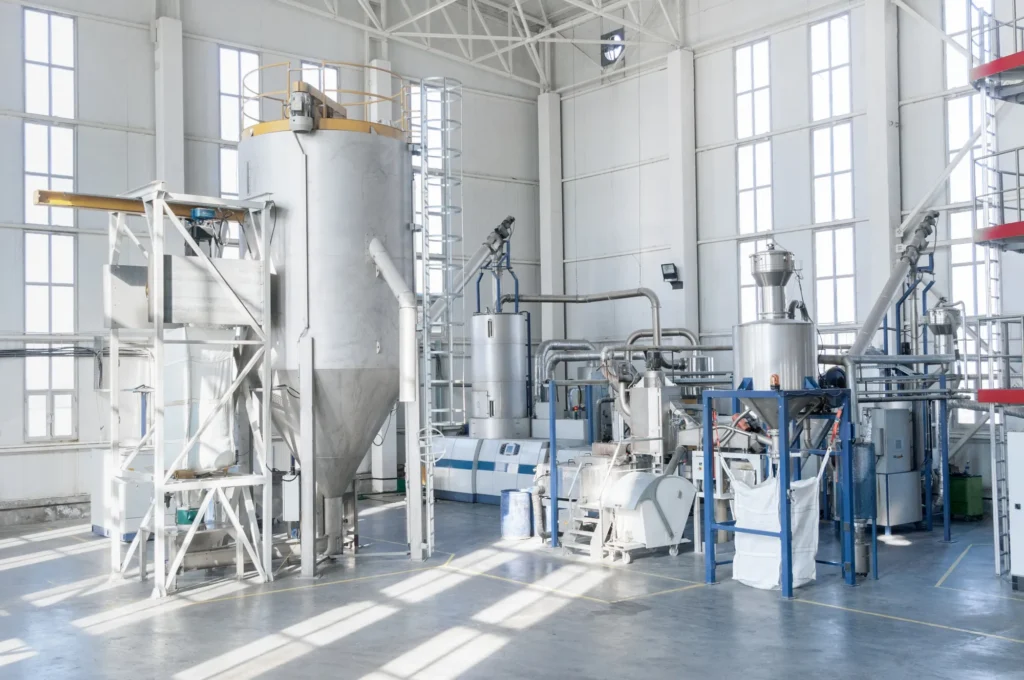
Case Reference: A textile enterprise invested 67,500 USD in installing reclaimed water reuse equipment and waste heat recovery systems. After transformation, the water reuse rate increased from 30% to 65%, saving 3,450 USD in water fees per month. Waste heat recovery was used for workshop heating, saving 2,700 USD in monthly steam costs during winter. The full investment was recovered in just 11 months, with an annual CO₂ emission reduction of approximately 800 tons.
III. Value Monetization: Three Profit Paths for Zero-Carbon Certification
After completing emission reduction transformations, converting zero-carbon certification into actual revenue is the key to avoiding the “emission reduction without increased revenue” dilemma. Enterprises can build a profitable closed loop through three dimensions: carbon trading, order premiums, and policy subsidies.
3.1 Participate in Carbon Trading Markets to Realize Carbon Asset Appreciation
The “Certified Emission Reductions (CCER)” generated through emission reduction can be sold in carbon trading markets. The current domestic carbon price is approximately 8.5 – 11.5 USD/ton, while the EU carbon price has exceeded 87 USD/ton. A medium-sized enterprise with an annual CO₂ emission reduction of 500 tons can achieve annual revenue of 4,250 – 5,750 USD solely from carbon trading. With carbon prices showing a long-term upward trend, carbon assets have appreciation potential.
3.2 Obtain Order Premiums and Market Access through Zero-Carbon Certification
Major global brands such as Nike, IKEA, and Apple have launched “zero-carbon supply chain programs.” Suppliers with zero-carbon certification can obtain an order premium of 10% – 20%. Meanwhile, obtaining certifications such as GOTS (Global Organic Textile Standard) and GRS (Global Recycled Standard) enables direct access to high-end markets by breaking through carbon tariff barriers in the EU, North America, and other regions.
3.3 Apply for Policy Subsidies to Reduce Transformation Costs
Countries around the world have introduced supportive policies for zero-carbon transformation. For example, the EU’s “Horizon Program” provides 30% – 50% subsidies for zero-carbon technology transformation projects, while some Southeast Asian countries offer 15% electricity subsidies to enterprises purchasing green electricity. Enterprises can connect with local policies through industry associations and third-party consulting institutions to minimize initial investment.
IV. Phased Implementation: Completing Zero-Carbon Transformation in 18 Months
Zero-carbon transformation does not need to be completed in one step. Phased advancement can reduce financial pressure and trial-and-error risks. It is recommended to implement the transformation in four steps: “Diagnosis – Pilot – Promotion – Monetization.”
- Months 1-2: Carbon Inventory and Plan Design: Entrust a third-party institution to conduct a full-process carbon inventory, identify core emission links, and formulate tailored energy and process transformation plans.
- Months 3-8: Small-Scale Pilot Transformation: Select one production line for energy or process transformation pilots, track indicators such as energy consumption, costs, and product quality, and promote the optimized plan comprehensively.
- Months 9-16: Full-Process Promotion and Certification: Apply the mature plan to all production links, and simultaneously apply for CCER certification and industry zero-carbon certification.
- Months 17-18: Value Monetization Implementation: Participate in carbon trading, connect with high-end orders, and apply for policy subsidies to realize a closed loop of transformation benefits.
Zero-carbon transformation is not an “option” but a “required course” for manufacturing enterprises to survive market cycles. From the energy-saving transformation of a single piece of equipment, to the restructuring of an energy system, and then to the acquisition of a zero-carbon order, every step builds the enterprise’s long-term competitiveness. As global carbon constraints tighten increasingly, early transformation, early implementation, and early monetization are the keys to seizing opportunities in the future zero-carbon market.