

A factory specializing in smart home appliance components once faced an awkward dilemma: it could not take on large orders, nor make profits from small ones. Its traditional production line required 8 hours for mold changeovers, and for small-batch customized orders of 500-2,000 units from customers, the mold change cost alone swallowed up 30% of its profits. After introducing a flexible production system in 2024, the situation took a dramatic turn for the better: the mold change time was reduced to 40 minutes, one production line could handle the processing of 5 product types simultaneously, and the delivery cycle for small-batch orders was cut from 15 days to 7 days. With this rapid response capability, the enterprise not only secured customized orders from multiple internationally renowned brands but also achieved a 45% year-on-year increase in quarterly revenue. In today’s era of increasingly personalized consumer demands and fragmented orders, flexible production is no longer an “optional upgrade” but a core support for manufacturing enterprises to unlock order value and achieve steady growth.
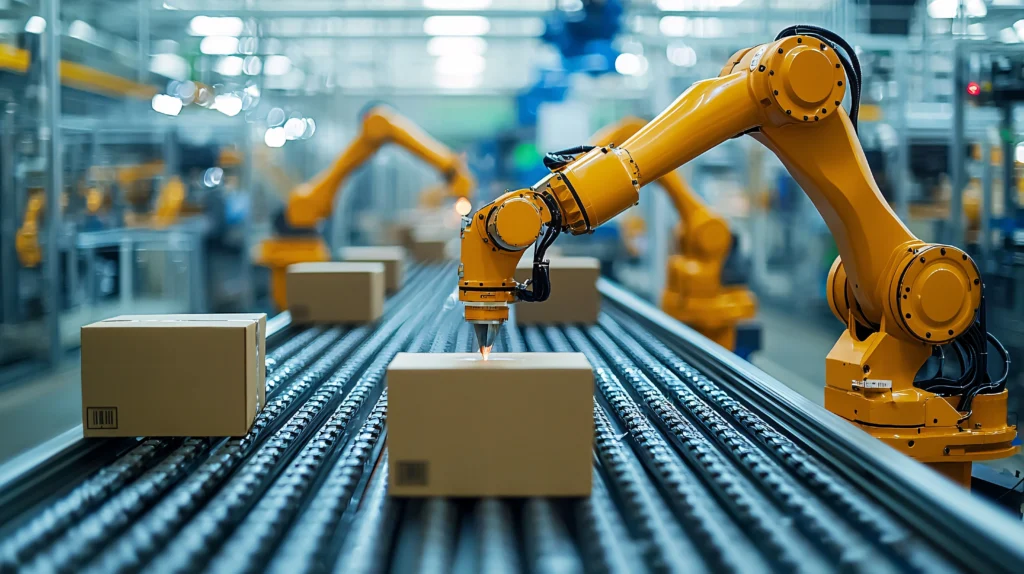
I. Growth Bottlenecks of Traditional Production Modes
Currently, most small and medium-sized manufacturing enterprises still rely on the traditional “large-batch, standardized” production mode. This mode was once highly effective in a market environment with stable demand, but now it gradually reveals shortcomings due to its inability to adapt to market changes, becoming a bottleneck restricting growth.
- Order Adaptation Limitations: Consumer demand for product function and appearance customization has surged. Traditional production lines cannot quickly adjust processes—either they have to give up small-batch customized orders, or they bear high retooling costs, thus missing growth opportunities. A garment OEM factory, for example, lost 12 core customers within half a year because it could not meet the “small-order, fast-response” demand from live-streaming e-commerce platforms.
- Inventory Turnover Pressure: Traditional production relies on market forecasts. To spread costs, enterprises often choose large-batch production, which can lead to massive inventory backlogs once market demand declines. According to industry data, the average inventory turnover rate of enterprises using traditional production is 60% lower than that of those using flexible production, and unsold inventory can account for up to 20% of revenue.
- Lag in Market Response: The long adjustment cycle of production lines makes it impossible to quickly follow fashion trends or customer demand changes. Even if new products are launched, they often miss the optimal market window, putting enterprises in a passive position of “being unsalable upon production.”
II. Flexible Production Upgrade: Three Core Paths for Different Enterprises
Flexible production is not a one-size-fits-all upgrade model. Manufacturing enterprises of different scales and industries can choose suitable upgrade paths based on their business characteristics. Combined with practical cases, “intelligent equipment transformation,” “process modular restructuring,” and “digital collaborative management” are the three most implementable directions.
| Upgrade Path | Core Practices | Investment Cost | Applicable Enterprises | Typical Results |
|---|---|---|---|---|
| Intelligent Equipment Transformation | Replace with intelligent equipment supporting rapid mold change, install sensors and control systems, and realize equipment interconnection | Medium-High (1-5 million per production line) | Machining, auto parts enterprises | Retooling time reduced by 70%, equipment utilization rate increased to over 85% |
| Process Modular Restructuring | Decompose production processes into independent modules, combine modules according to order requirements, and realize “production based on sales” | Medium-Low (mainly process optimization costs) | Garment, electronic assembly enterprises | Small-batch order delivery cycle reduced by 50%, inventory reduced by 65% |
| Digital Collaborative Management | Introduce MES system, integrate order, production and inventory data, and realize full-process visual management and control | Medium (system investment: 200,000-1 million) | Various small and medium-sized manufacturing enterprises | Production error rate reduced by 80%, order response speed increased by 40% |
Key Reminder: Small and medium-sized enterprises do not need to pursue “full flexibility” in one step. They can adopt the strategy of “partial pilot – effect verification – gradual promotion.” For example, first carry out modular transformation of core production lines or introduce a lightweight MES system, and expand investment after verifying value with minimal cost.
III. Steady Implementation: Four Key Actions for Flexible Production Upgrade
Many enterprises fall into the misunderstanding of “high investment but poor results” in flexible production upgrading, mainly because they ignore preliminary planning and supporting guarantees. To achieve efficient upgrading, the following four key actions must be well implemented.
3.1 First Analyze Orders to Accurately Locate Demands
Before upgrading, enterprises need to sort out order data from the past 1-2 years and clarify core indicators such as order batch range, customization ratio, and delivery cycle requirements. For example, enterprises focusing on small-batch customized orders should prioritize improving retooling efficiency; those mainly handling standardized orders with large fluctuations need to focus on strengthening coordination between inventory and production. An electronic OEM factory found through order analysis that 60% of its orders were in the batch range of 1,000-3,000 units. Based on this, it prioritized transforming the mold change systems of 3 core production lines, reducing investment costs by 40%. After transformation, it accurately matched the mainstream order demands.
3.2 Connect Upstream and Downstream to Break Data Barriers
The core of flexible production is “rapid response,” which cannot be achieved by internal upgrading alone. Enterprises need to connect with upstream suppliers and downstream customers to realize data interconnection. Upstream suppliers can share raw material inventory and delivery cycle data to help enterprises formulate accurate production plans; downstream customers can transmit order demands and change information in advance to avoid production deviations. The aforementioned home appliance component factory realized real-time synchronization of order demands by accessing customers’ order systems, reducing the response time for production plan adjustments from 2 days to 2 hours.
3.3 Synchronously Upgrade Personnel Capabilities to Avoid “Equipment Idleness”
Intelligent equipment and new processes require professional personnel to operate. Many enterprises ignore personnel training, resulting in equipment only functioning at a basic level after upgrading. Enterprises need to establish a training system covering “equipment operation, process management, and data analysis,” enabling front-line workers to master the operation skills of intelligent equipment and managers to optimize production through data. A machinery enterprise conducted a one-month special training after introducing an intelligent production line, enabling the equipment to reach production capacity quickly and avoiding the problem of “buying expensive equipment but operating it inefficiently.”