

As the wave of Industry 4.0 sweeps across the globe, the competitive focus of the manufacturing industry has shifted from “scale and cost” to “efficiency and precision”. Traditional sewing, injection molding, and silicone processes, which once relied heavily on manual experience, are now undergoing a fundamental transformation from “experience-driven” to “data-driven” through the in-depth empowerment of the Internet of Things (IoT), AI algorithms, and automated equipment. Smart craftsmanship is not merely an innovation in production tools, but a core engine that reshapes the entire manufacturing chain and achieves dual breakthroughs in efficiency and quality.
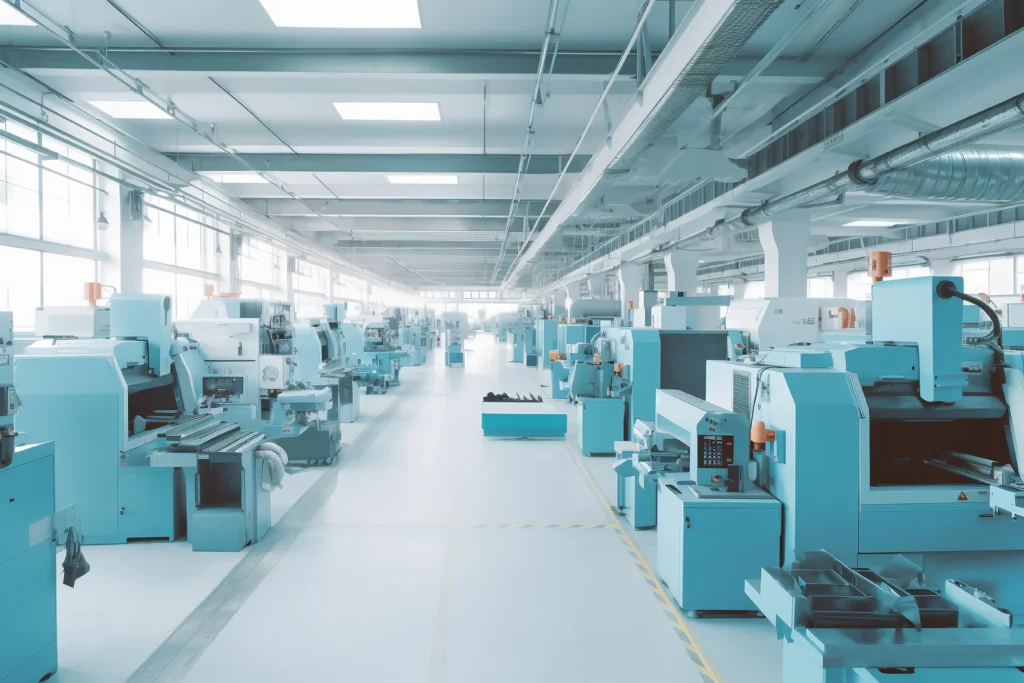
I. How Does Smart Technology Reshape Core Processes?
Smart upgrading is not a simple replacement of equipment, but the integration of data sensing and algorithmic decision-making into every link of the production process, forming a closed-loop system of “perception-analysis-optimization-execution”. This transformation manifests in different forms across the three core processes, all aiming at the common goals of “cost reduction, efficiency improvement, and quality enhancement”.
1.1 Sewing Process: From “Manual Alignment” to “AI-Precision Control”
The productivity and quality of traditional sewing workshops are highly dependent on the proficiency of skilled workers, with issues such as uneven fabric tension and stitch errors being unavoidable. The smart sewing system achieves upgrades through three major technological breakthroughs: First, high-definition visual sensors capture fabric textures and cutting contours in real time, transmitting data to the AI control system that automatically matches the optimal sewing speed and stitch density. Second, servo motors replace traditional motors, with response speed increased to 0.01 seconds, enabling dynamic adjustment of presser foot pressure based on fabric thickness. Third, all workshop equipment is connected via IoT, with production data synchronized to the cloud in real time, allowing managers to remotely monitor order progress and equipment status.
After a clothing OEM factory introduced the smart sewing system, the daily output of a single device increased by 32%, the stitch error rate dropped from 1.5% to 0.1%, and manual inspection costs decreased by 60%, completely transforming the traditional “personnel-dependent supervision” model.
1.2 Injection Molding Process: “Predictive Maintenance” Solves Unplanned Downtime
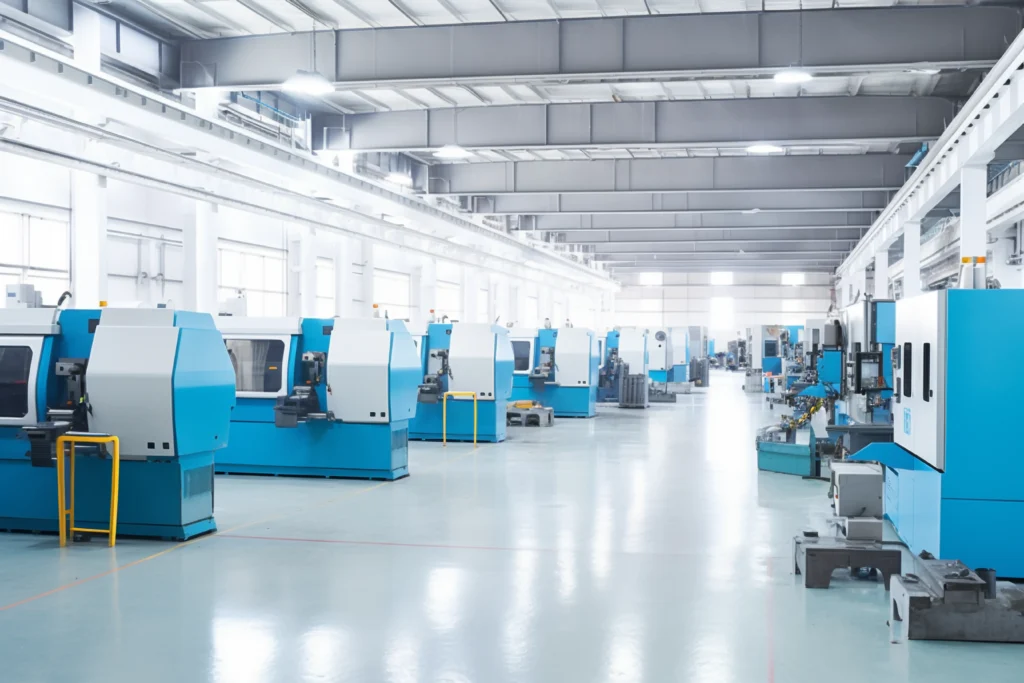
In injection molding production, issues such as mold wear and temperature fluctuations often lead to unplanned downtime, causing significant losses to enterprises. The core advantages of the smart injection molding system lie in “early warning” and “precision control”: temperature and vibration sensors embedded in key parts of the mold collect real-time data, and algorithms analyze wear trends to issue maintenance alerts 72 hours in advance. The AI temperature control system, based on material properties, improves the precision of injection molding temperature control to ±0.5℃, avoiding product defects caused by temperature deviations.
More notably, the smart system can automatically optimize injection molding parameters by learning thousands of sets of production data. After a car parts enterprise applied this system, mold failure rate decreased by 80%, product qualification rate rose from 95% to 99.8%, and the production cycle of a single batch was shortened by 20%.
1.3 Silicone Process: “Intelligent Formula Iteration” Boosts R&D Efficiency
The R&D and adjustment of silicone formulas were once “trial-and-error” tasks, relying on engineers’ experience to repeatedly adjust ingredient ratios, with R&D cycles often lasting for months. The smart silicone system accelerates this process through two innovations: First, it establishes a database containing tens of thousands of silicone formulas, where AI quickly matches basic formulas based on product performance requirements (such as high-temperature resistance and elastic modulus). Second, automated experimental equipment can conduct 20 sets of parallel experiments simultaneously, collecting real-time data on curing time and mechanical properties, and optimizing formula ratios through algorithm iteration.
A silicone product enterprise, targeting the demand for new energy vehicle seals, shortened the formula R&D cycle from 3 months to 15 days with the help of the smart system, reduced R&D costs by 45%, and achieved product performance that more accurately meets customer requirements.
II. Full-Chain Collaboration: The Value Amplifier of Smart Craftsmanship
The greatest value of smart craftsmanship lies in breaking down information barriers in individual links and realizing full-chain collaboration from R&D and production to supply chain. Taking a consumer electronics client we serve as an example, its smart manufacturing system demonstrates significant collaborative effects.
On the R&D side, AI simulates product usage scenarios based on market demand data, outputs optimal structural design schemes, and directly connects to injection molding and silicone process parameters. On the production side, smart equipment in sewing, injection molding, and silicone workshops shares production progress in real time, automatically adjusting capacity allocation to avoid order backlogs in any link. On the supply chain side, the smart system links raw material suppliers, automatically triggering procurement requests based on production data to achieve “production-based purchasing” and reduce inventory costs by 30%.
After the client introduced the smart system, overall production efficiency increased by 40%, order delivery cycle shortened from 15 days to 7 days, and customer satisfaction rose by 28%. This fully proves that the value of smart craftsmanship lies not only in the optimization of individual links, but also in the efficiency restructuring of the entire chain.
III. Future Trends: Integration of Human-Machine Collaboration and Green Intelligence
3.1 Human-Machine Collaboration Becomes the Mainstream Model
Smart craftsmanship is not about replacing humans, but achieving “human-machine complementarity”. In the future, AI will take on repetitive tasks such as data analysis and parameter optimization, while skilled workers will focus on creative links such as process innovation and equipment debugging. For example, the smart sewing system can automatically complete standardized sewing procedures, and workers only need to perform process programming and quality sampling for complex styles, realizing the model of “machines handle repetitive work, humans focus on innovation”.
3.2 Green Intelligence Enables Sustainable Development
The integration of smart technology and green manufacturing will become a core trend in the next phase. Smart systems can optimize production processes through algorithms to reduce energy consumption and raw material waste. For instance, smart injection molding machines can automatically adjust material input based on product weight to reduce scrap; smart sewing systems can optimize fabric cutting paths, increasing fabric utilization rate by 5%-8%. This “smart + green” model not only meets efficiency needs, but also aligns with the global carbon neutrality goal.
The smart upgrade of the manufacturing industry is not an option, but a necessity for survival. From the precision control of sewing to the predictive maintenance of injection molding, from the formula iteration of silicone to the collaborative linkage of the entire chain, smart craftsmanship is redefining the core competitiveness of the manufacturing industry. We will continue to deepen the integration and innovation of smart technology and craftsmanship, providing customers with integrated solutions of “efficiency improvement + quality upgrade + green sustainability”. If you are facing bottlenecks in production efficiency or quality enhancement, we look forward to working with you to embark on a new journey of smart manufacturing.